The object
The Kodak Charmera — from shelf to flash chip
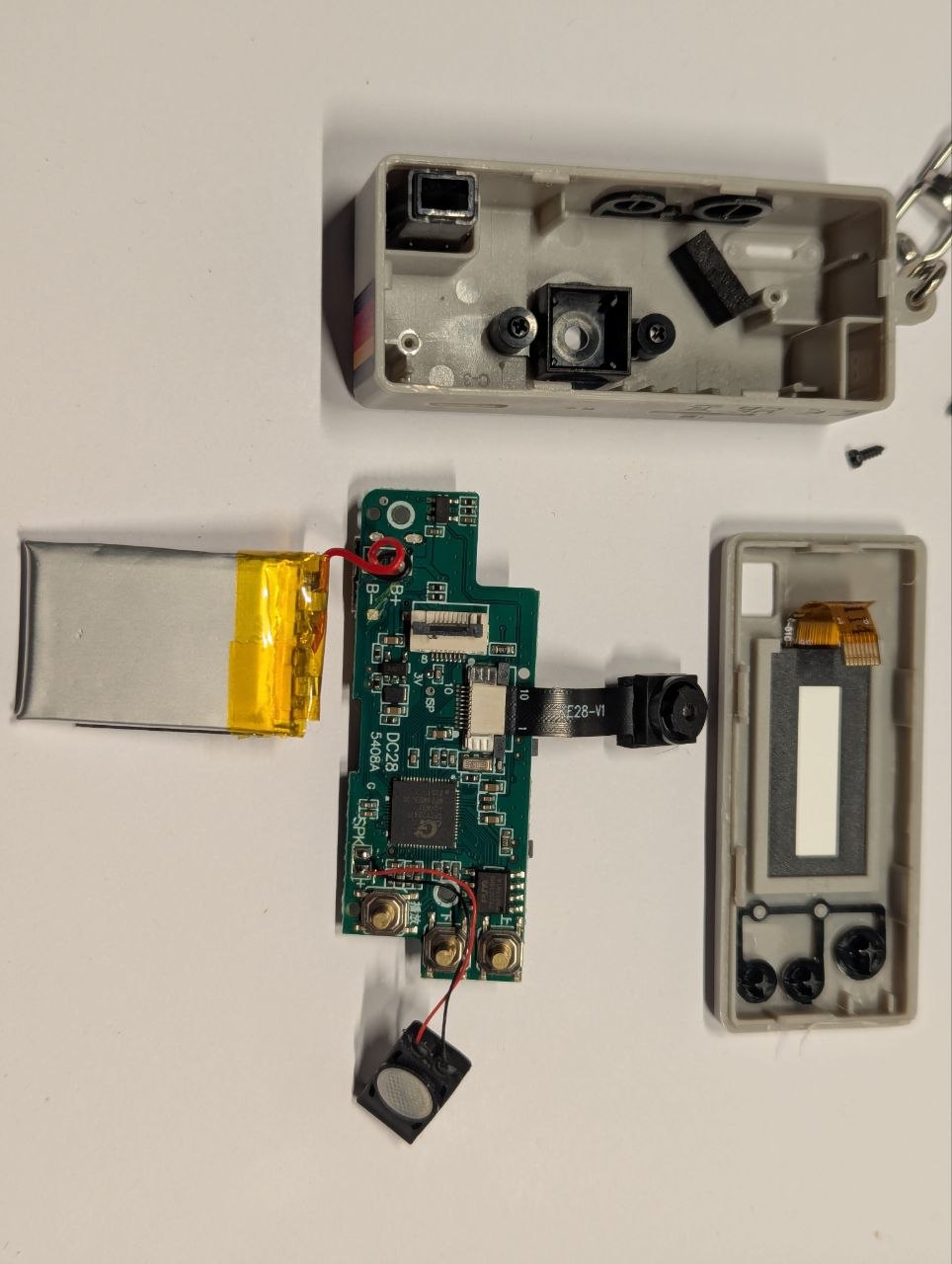
Teardown: PCB, battery, sensor, speaker
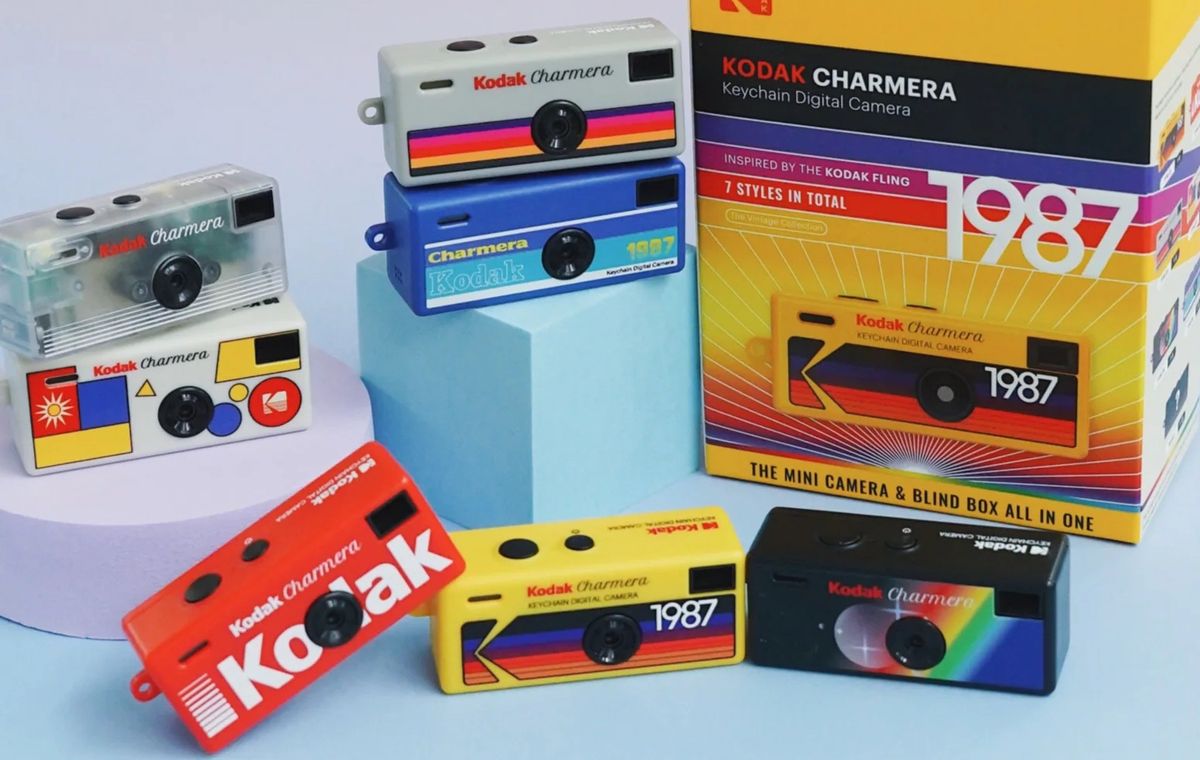
Product line (7 styles)
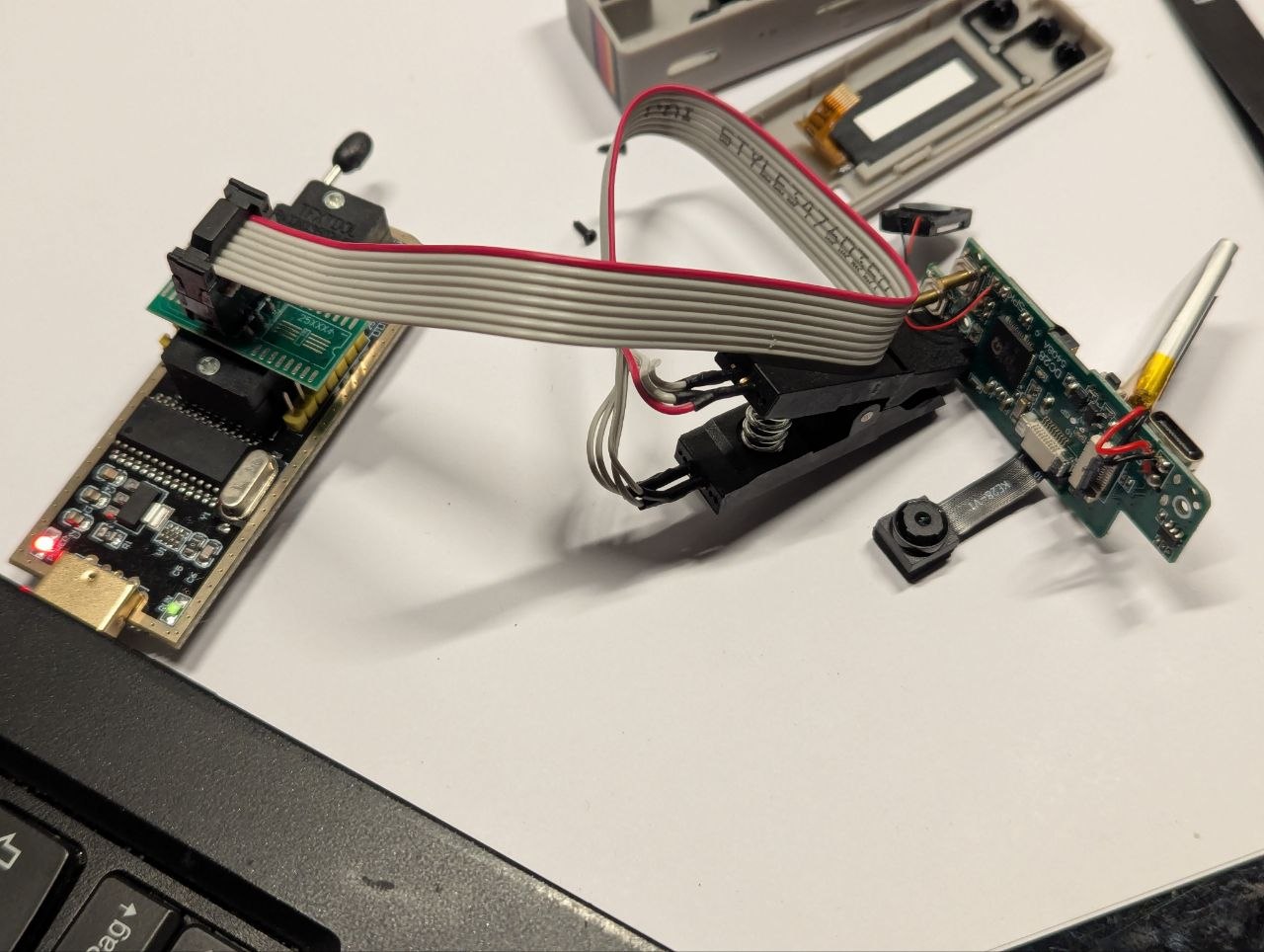
SPI programmer + SOIC8 clip on the flash
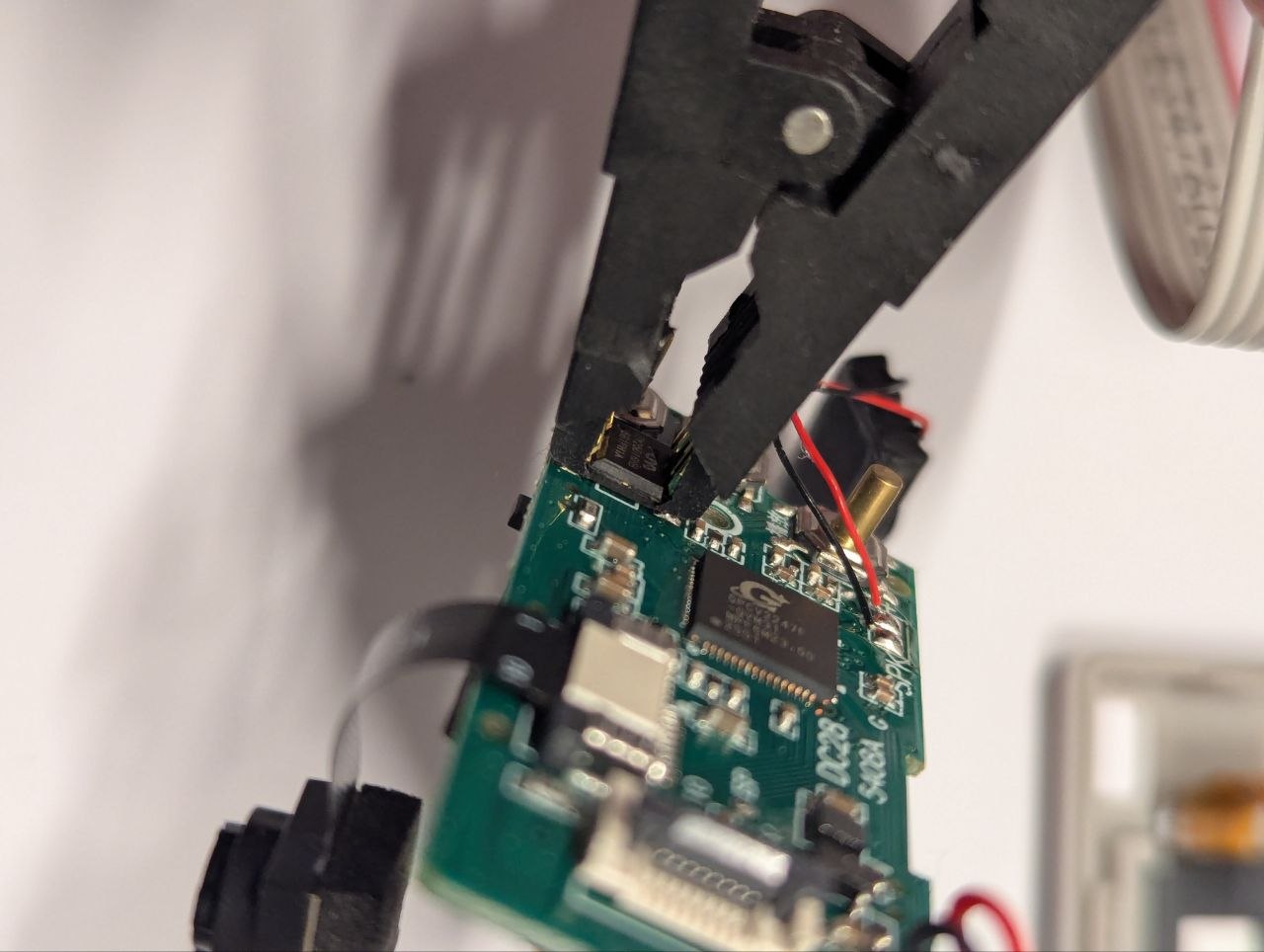
Flash chip under the clip
Method
How to look at it with radare2
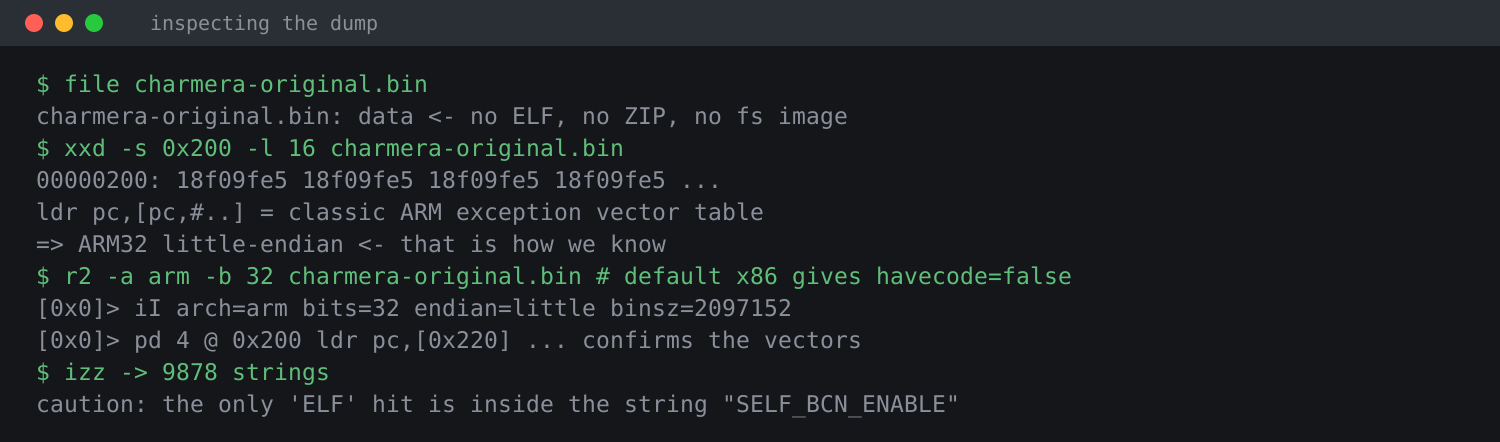
file only says "data". The byte pattern at 0x200 (ldr pc,[pc,#..], the exception vector table) identifies ARM32 little-endian — that is why you pass -a arm -b 32. r2 defaults to x86 and reports havecode=false.
The problem
3,900 functions you will never read by hand
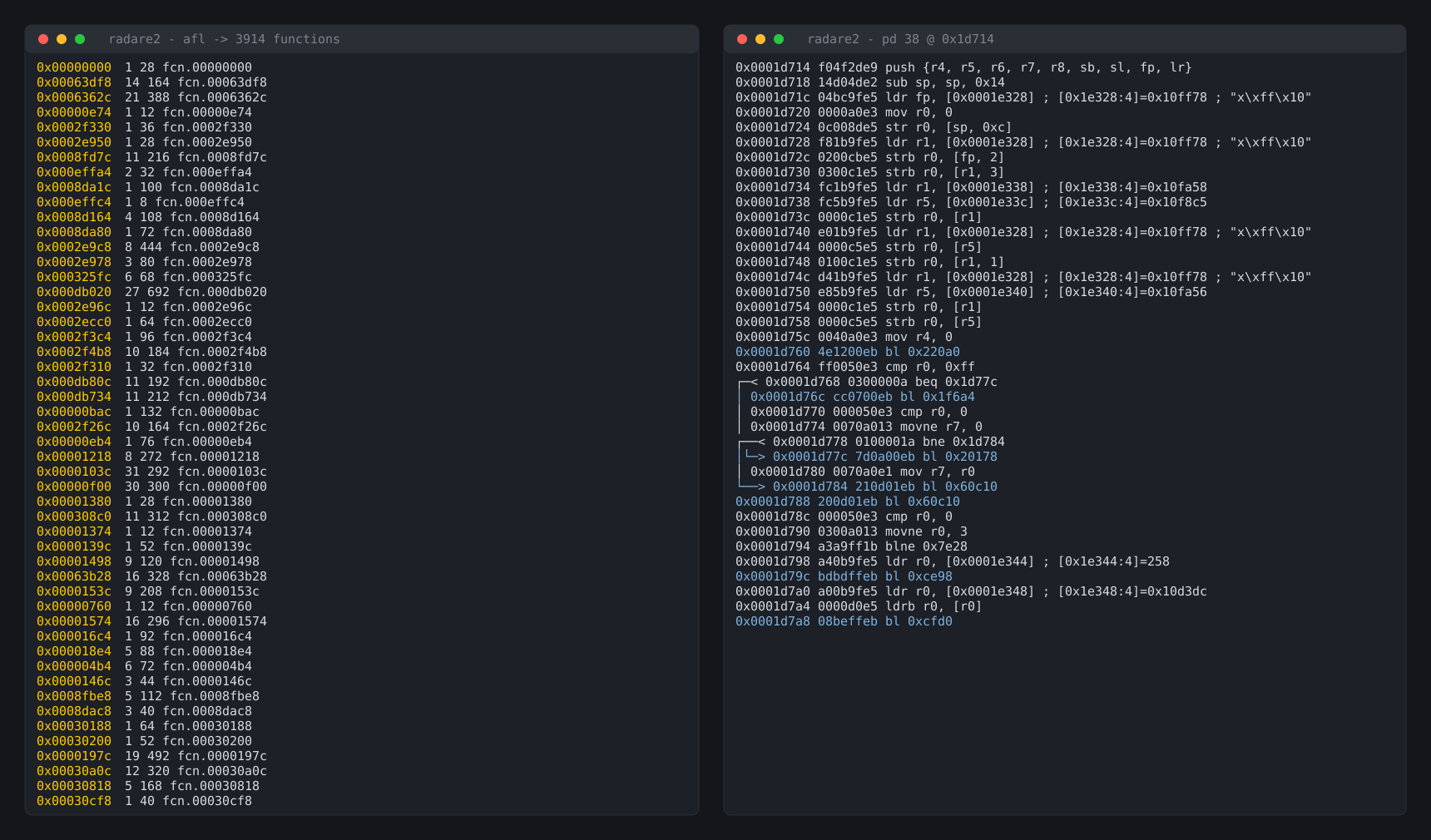
Left: the function list from afl. Right: the raw ARM of one function (pd 38 @ 0x1d714). This is the scale no human holds in their head — which is why the method and the AI come next.
Method
AI + radare2, iterated
the commands: radare2, driven headless
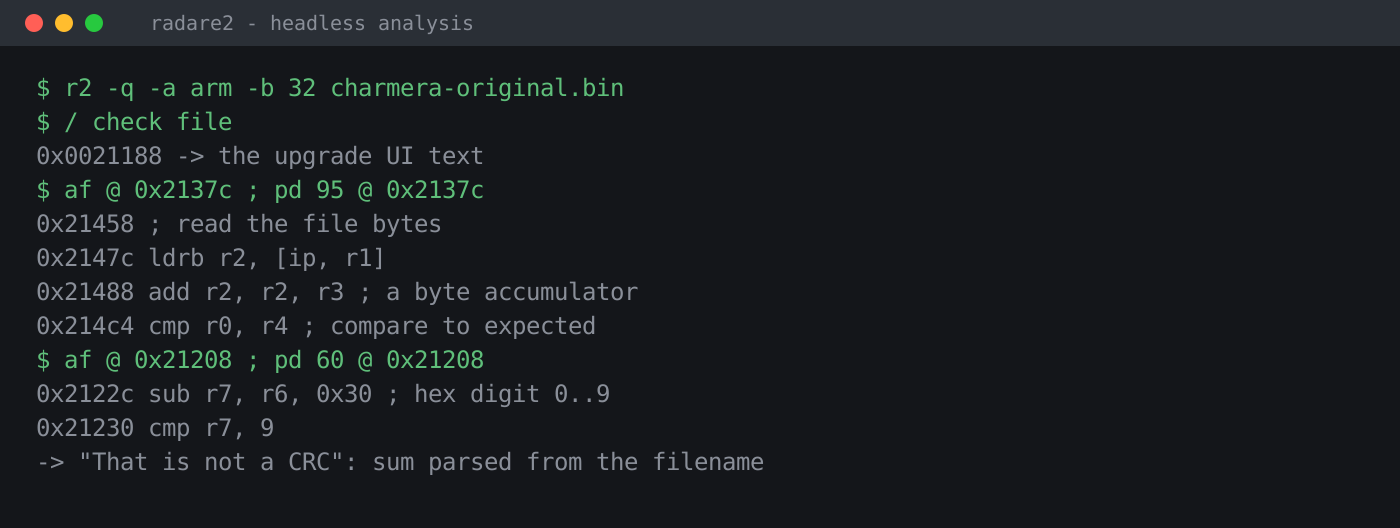
a slice of the AI chat that guided the analysis
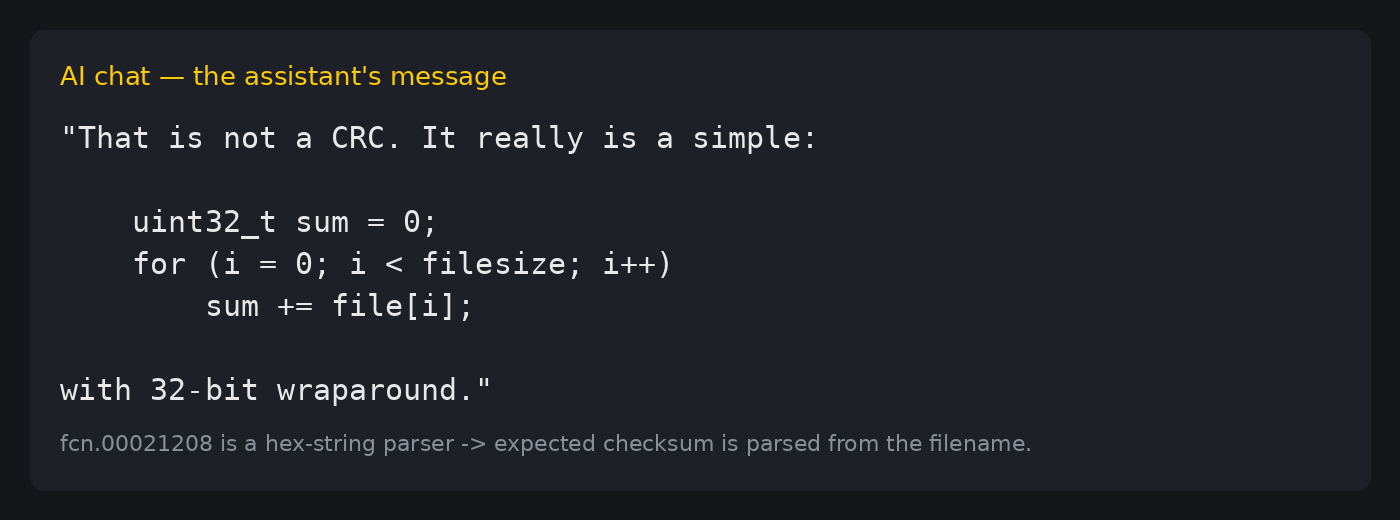
Loop: the AI proposes a hypothesis (e.g. "fcn.00021208 is a hex parser"); we check it in radare2 — seek, pd/pdf, axt, string search — then disassemble the next function. Every claim is tied to a concrete file offset (e.g. the checksum loop at 0x21458), so it stays verifiable.
Disassembly
Functions reveal their domain
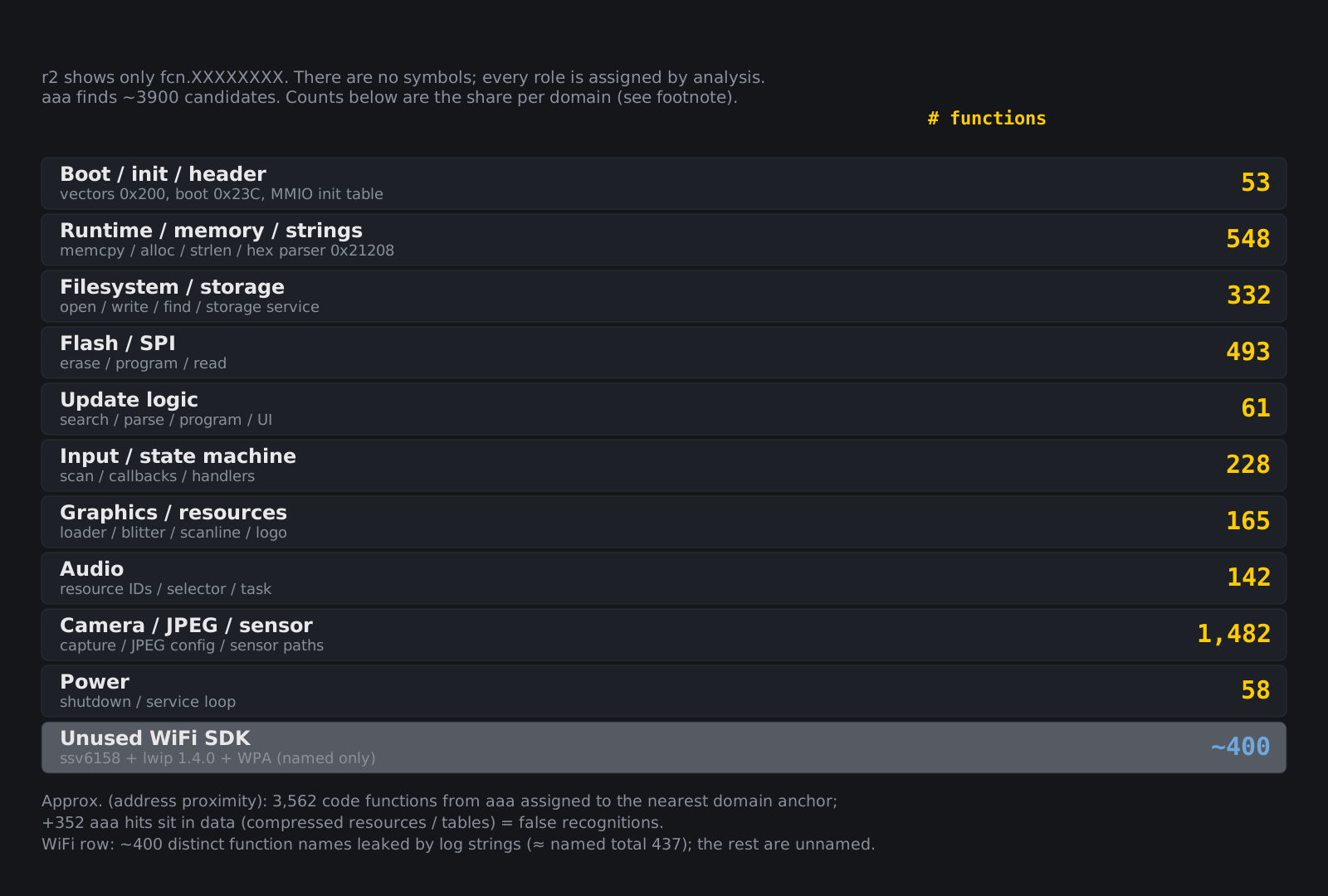
No symbols, so r2 names them only fcn.XXXXXXXX. Counts are approximate (nearest domain anchor): 3,562 code functions, plus 352 aaa hits that land inside data (compressed resources, tables) — false recognitions.
Method & result
Finding data — and where it is used
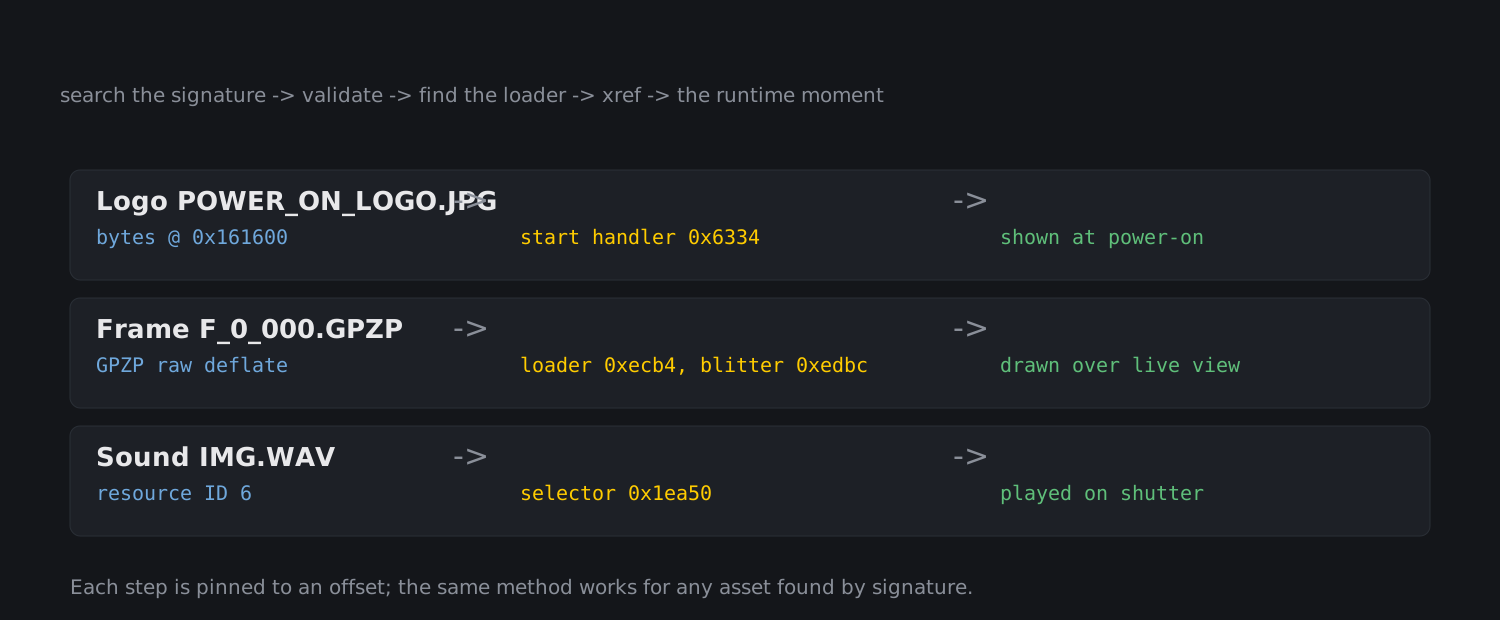

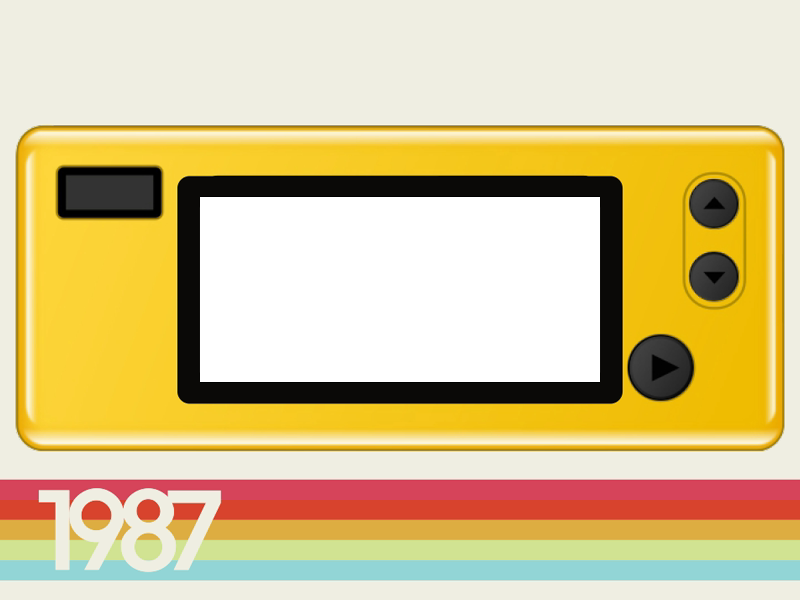
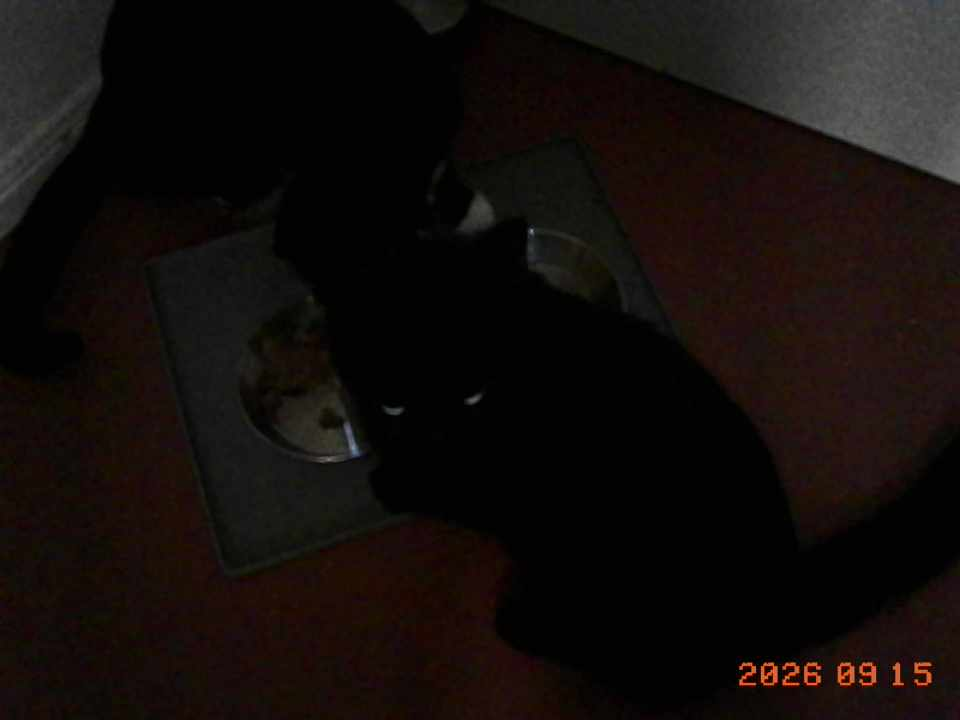
Same method for every asset: search the signature, validate it, find the consumer, land on the runtime moment. Found: 4 JPEG, 5 WAV, 12 GPZP. GP+ is Generalplus's own container for these UI assets (a name/ID table plus GPZP / JPEG / WAV payloads).
The object
Facts before interpretation
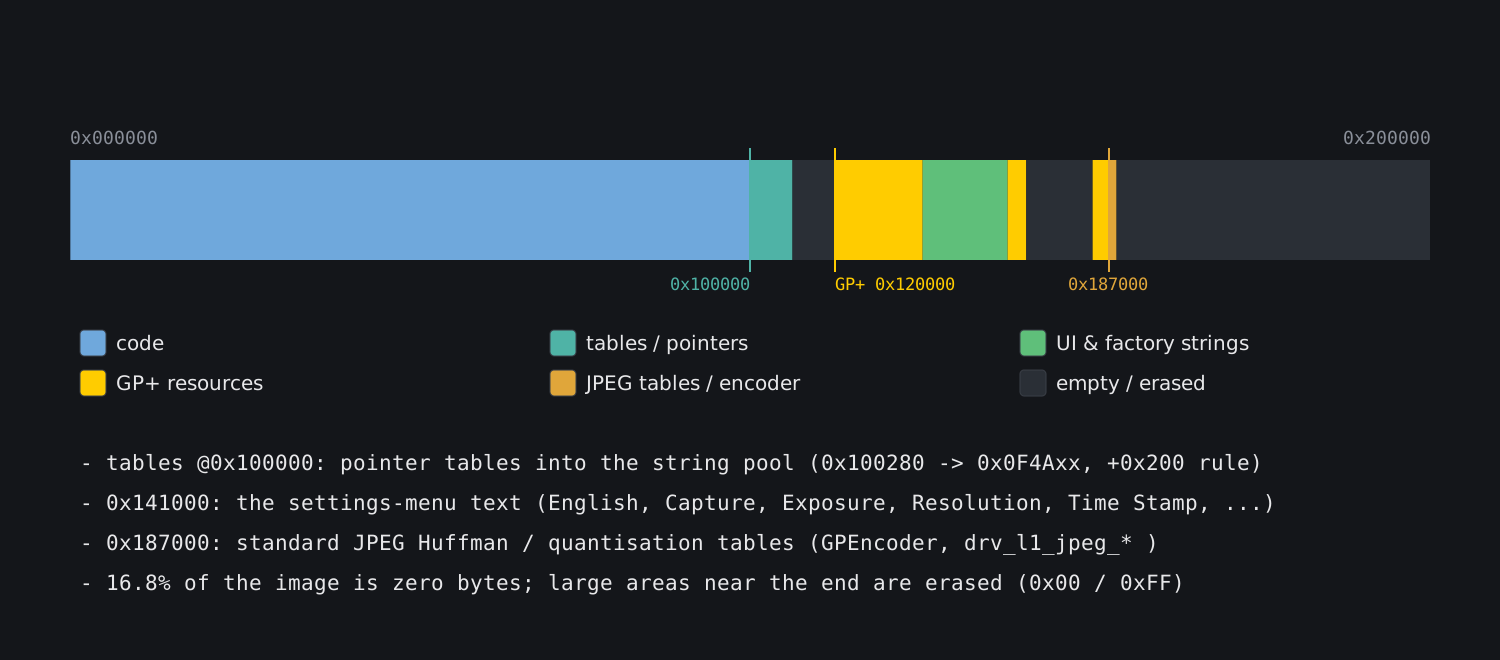
2 MiB · SHA-256 d8797ced… · byte-sum 113C7C08 · no ELF · MMIO init table in the header · GP+ package at 0x120000
Rendering
The blitter — and the frames it draws
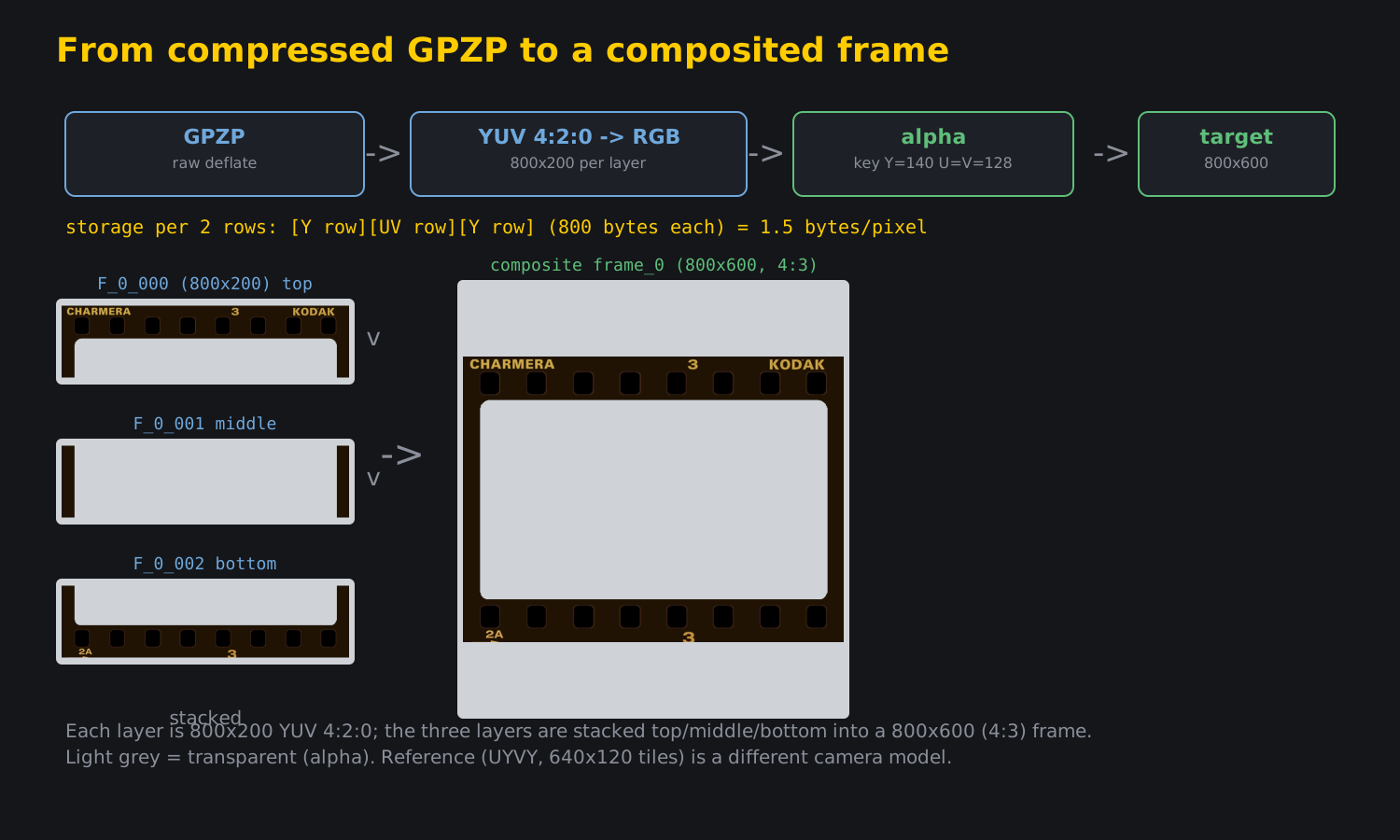
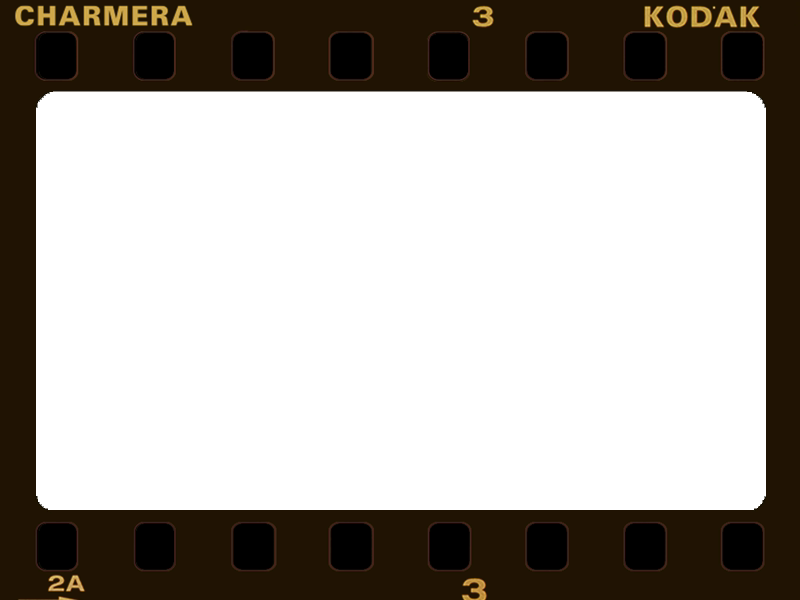
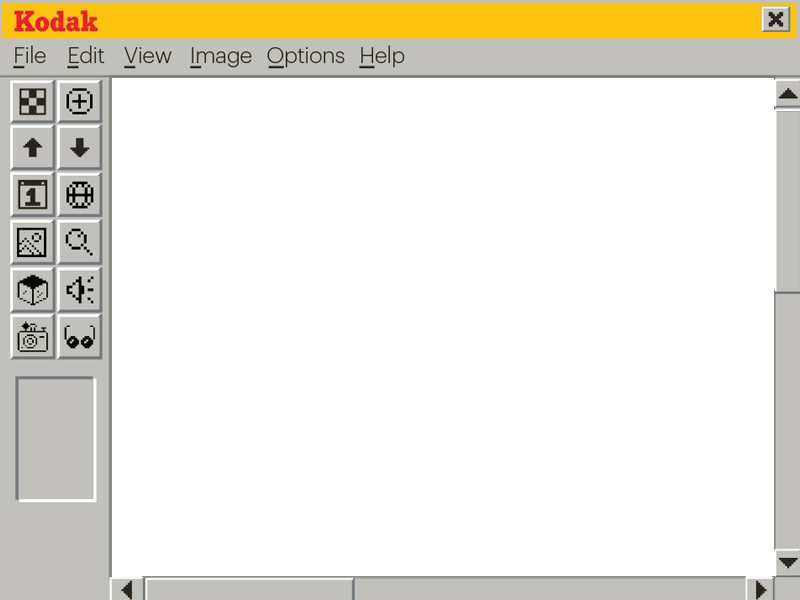
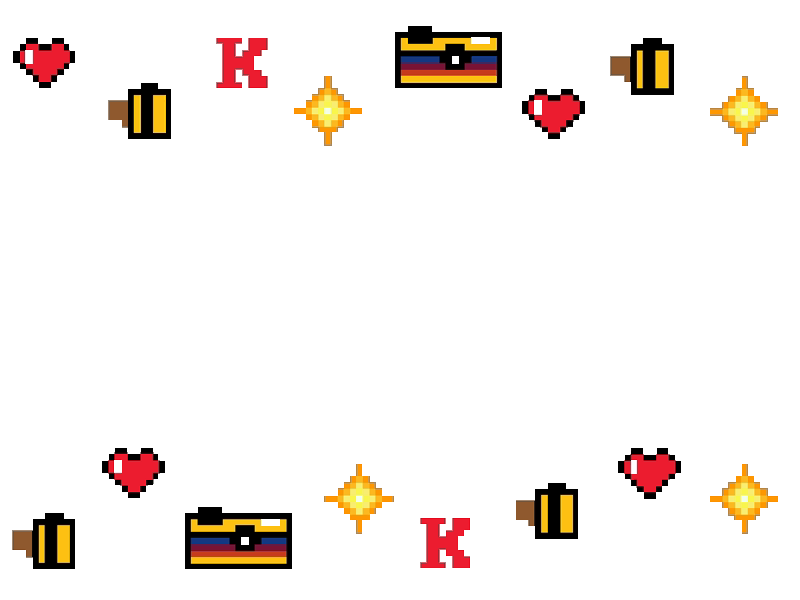
All four frames, decoded — each 800×600, YUV 4:2:0 stacked from 3 layers.
Custom content
Swap a frame, or build your own
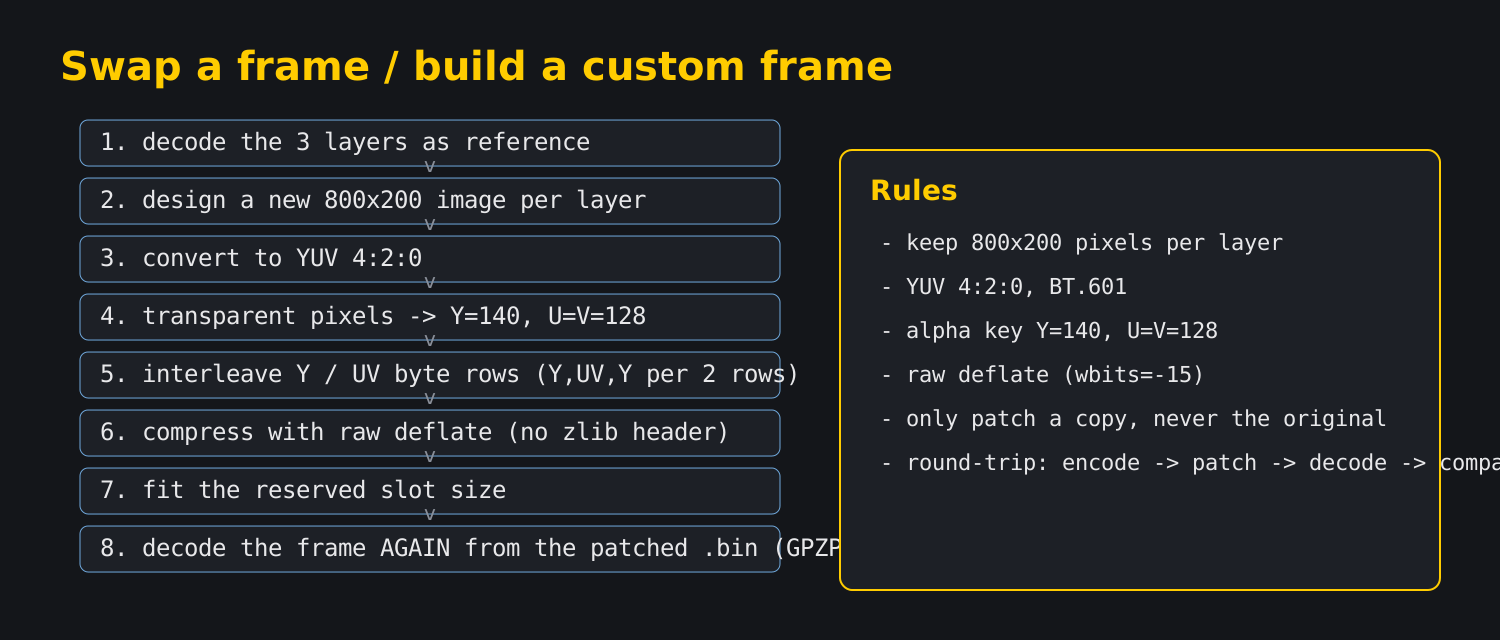
Custom content
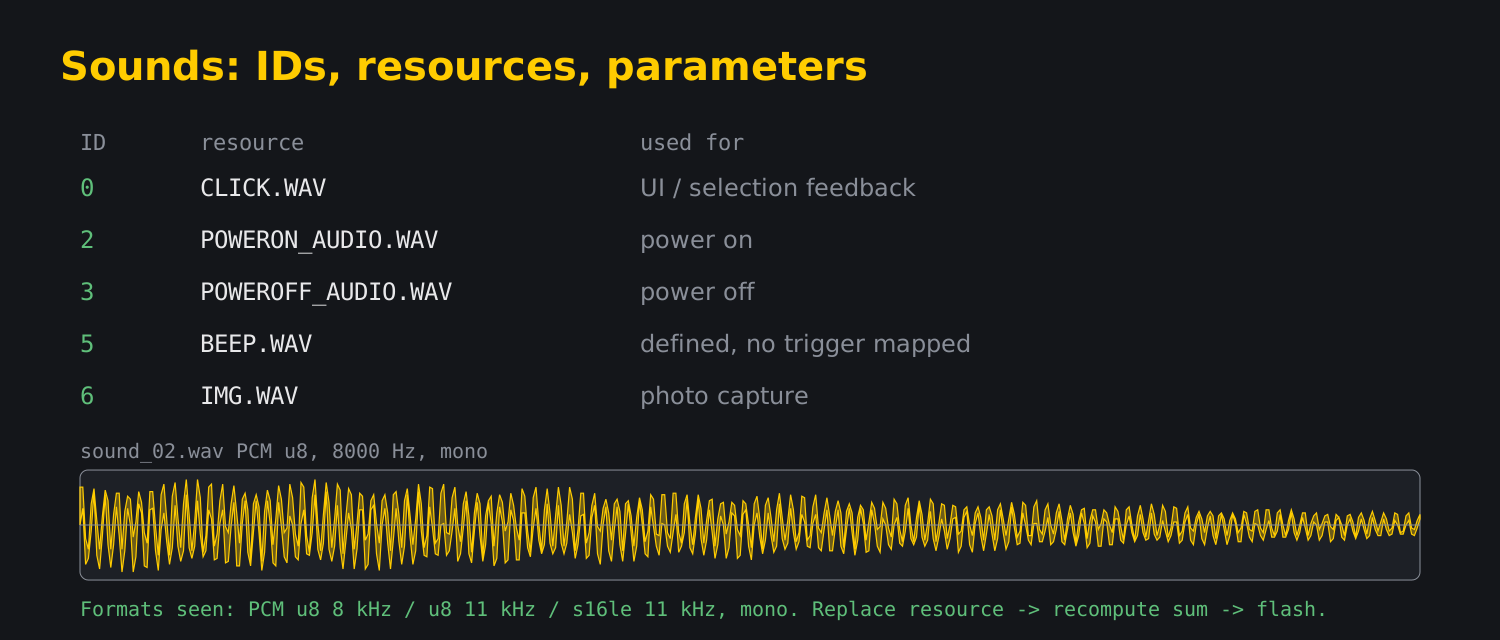
Custom sounds
Hardware from code
The firmware describes the board
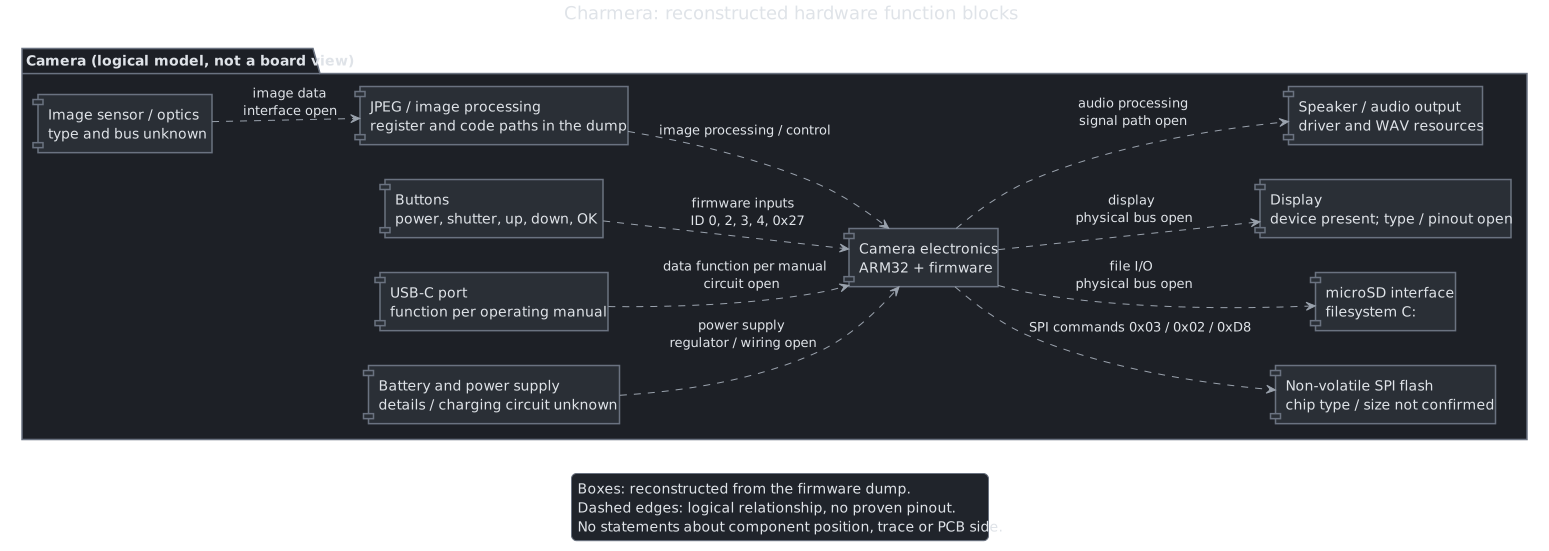
Logical blocks, not a physical PCB layout: sensor, JPEG, SPI-NOR, SD, display, buttons, audio, USB, battery.
Input
Buttons and states
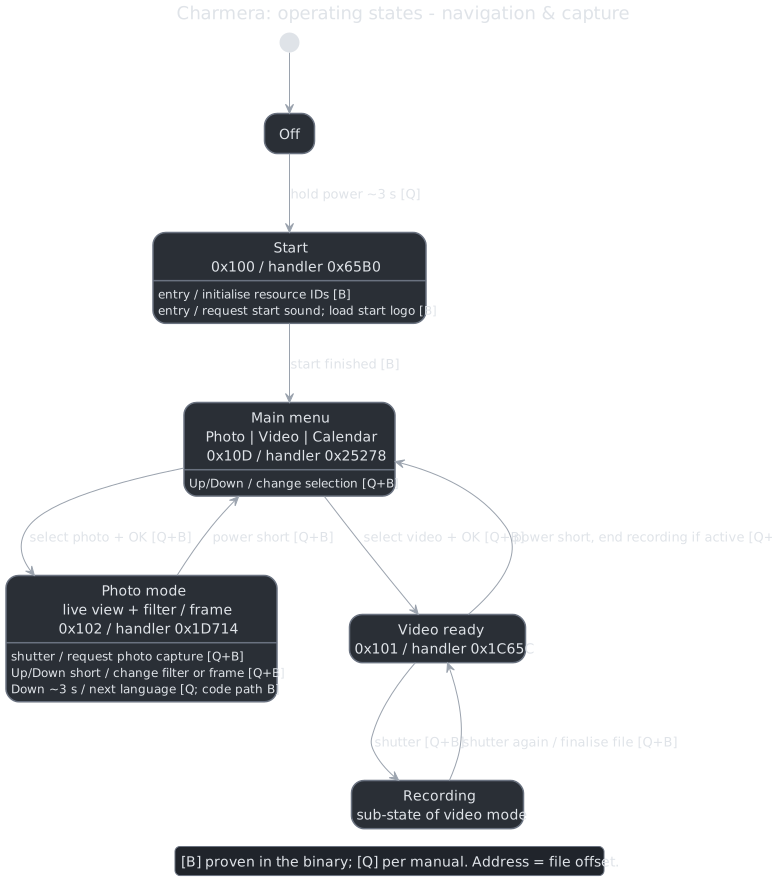
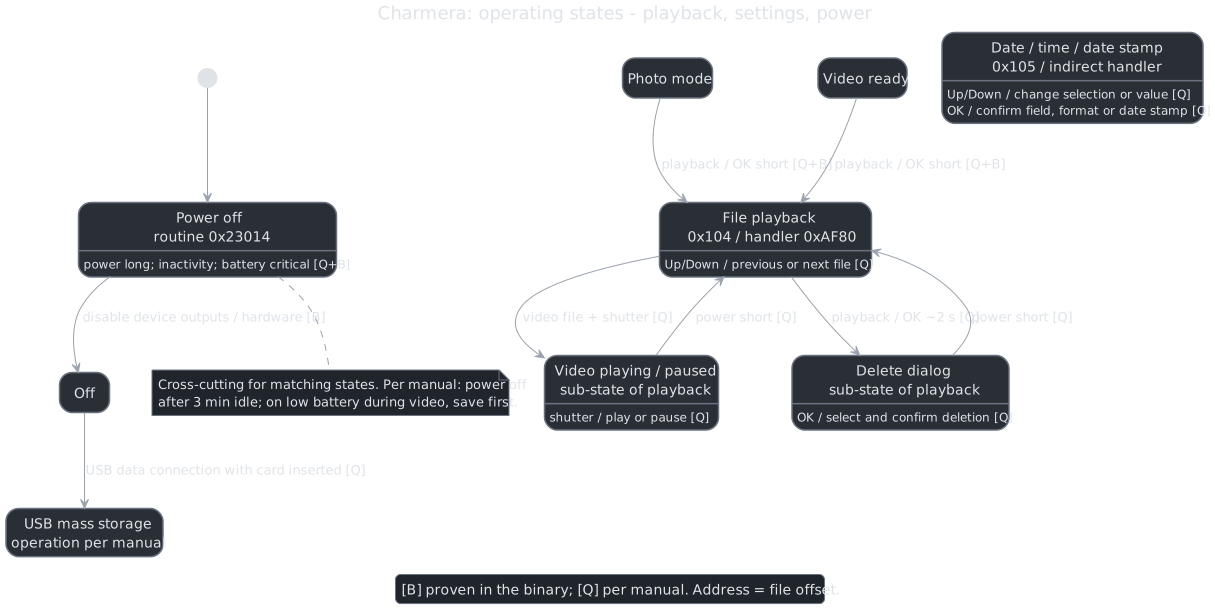
Firmware IDs and MMIO bit numbers — not physical pinout.
Input
How a press reaches display, capture and sound

Capture
One photo, end to end
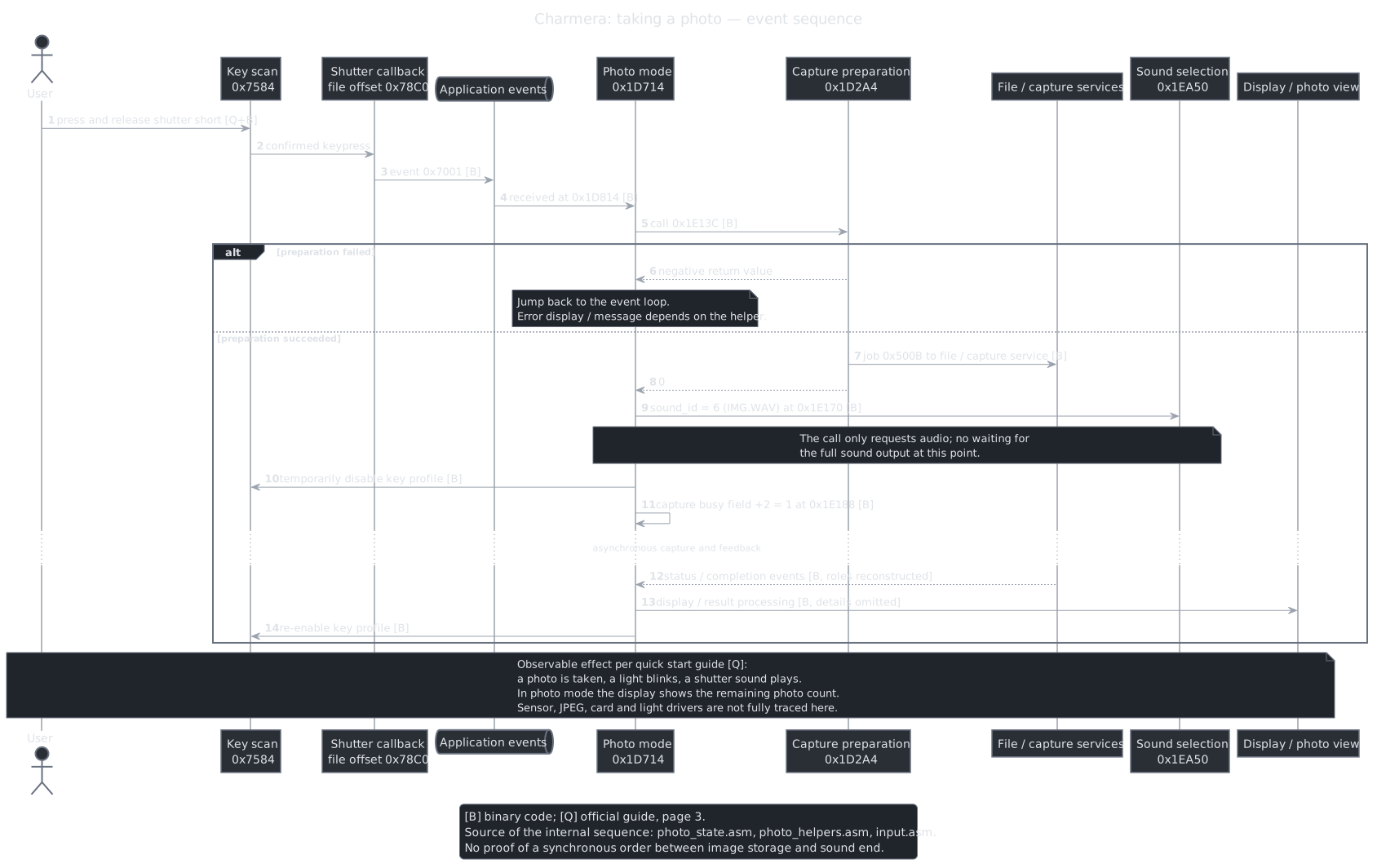
Trigger → IMG.WAV → pipeline → C:\DCIM\PICT%04d.jpg
Audio
Sound IDs to resources
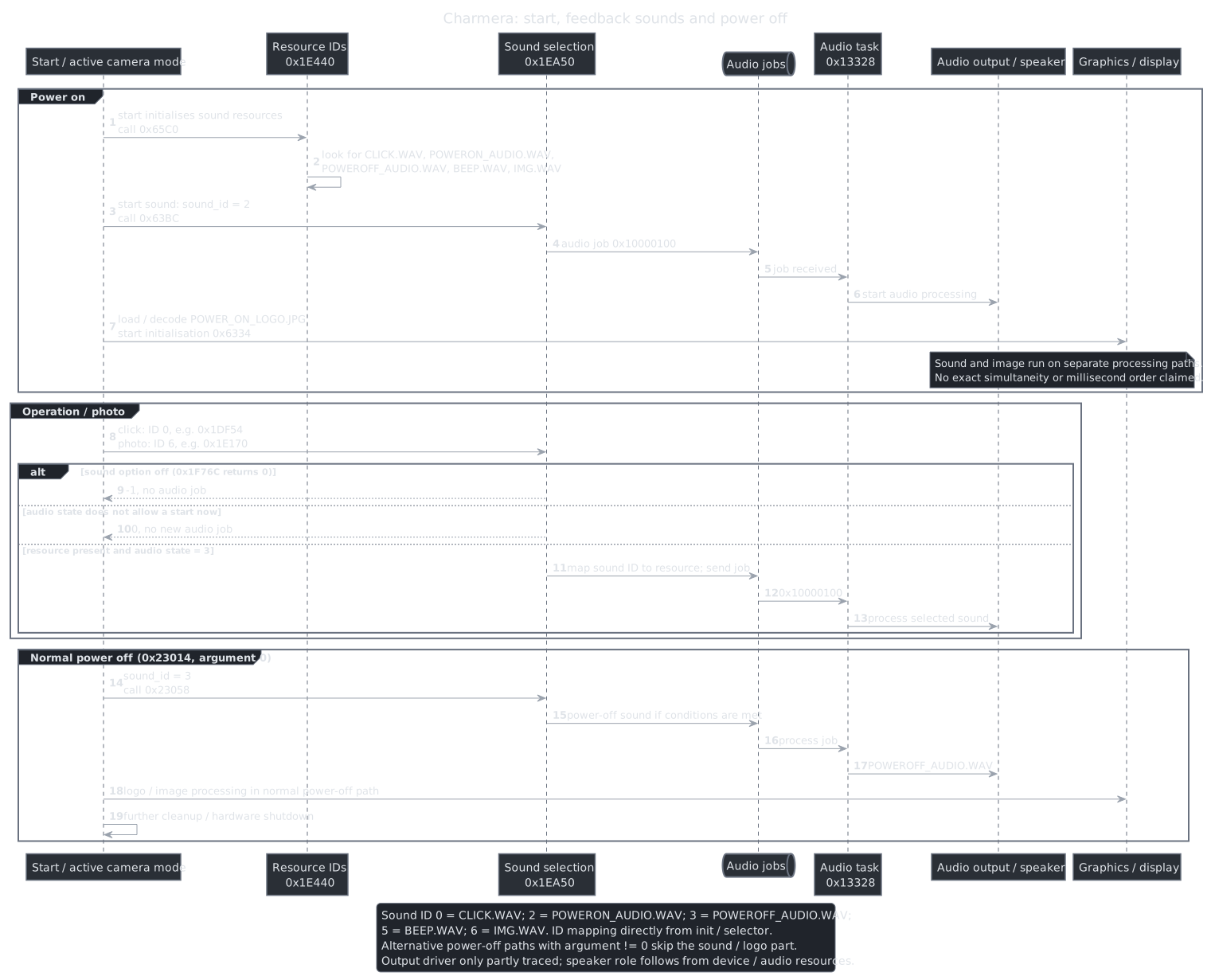
A keypress can trigger an action even when no sound plays — the selector checks options and state first.
Highlight
The update path
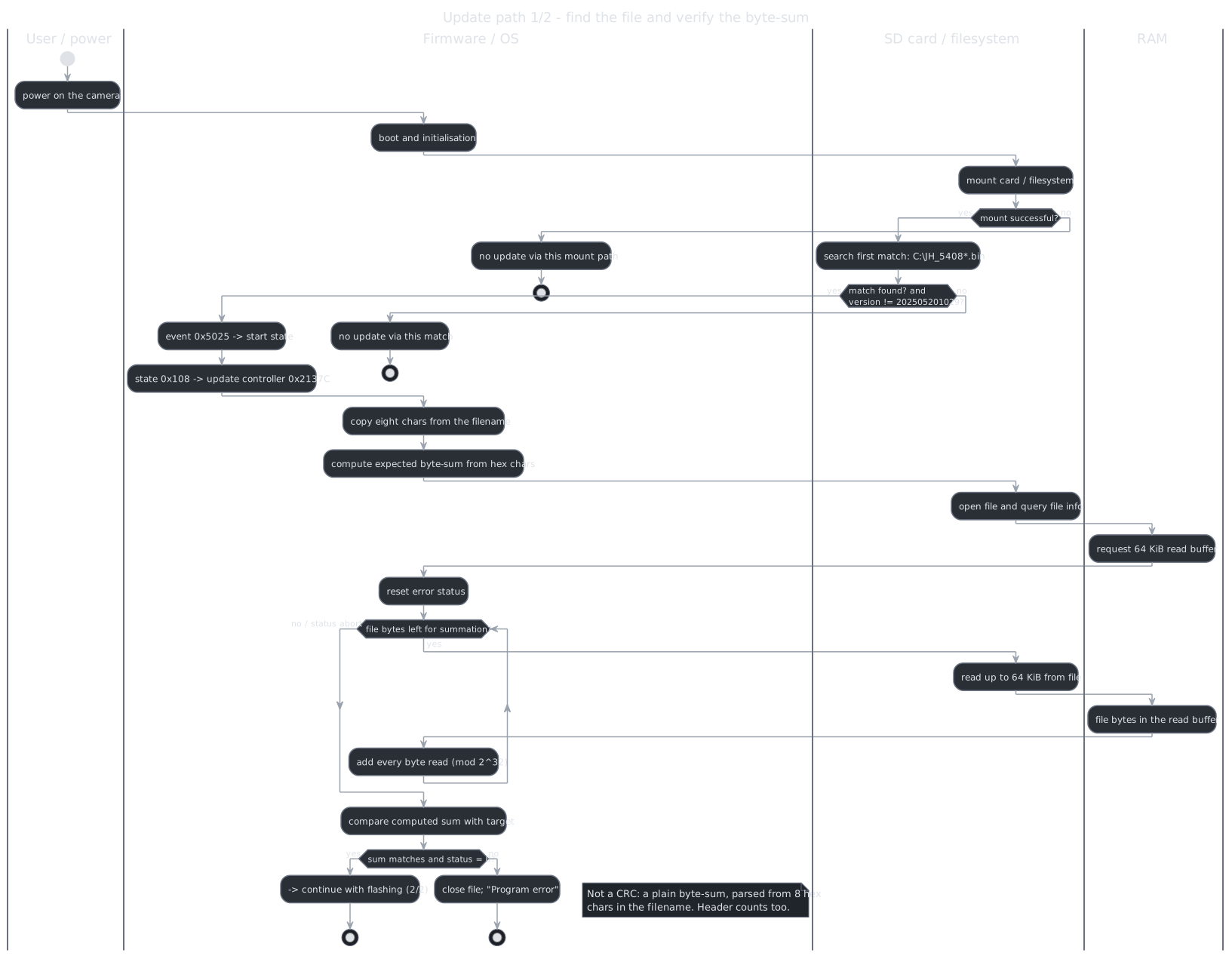
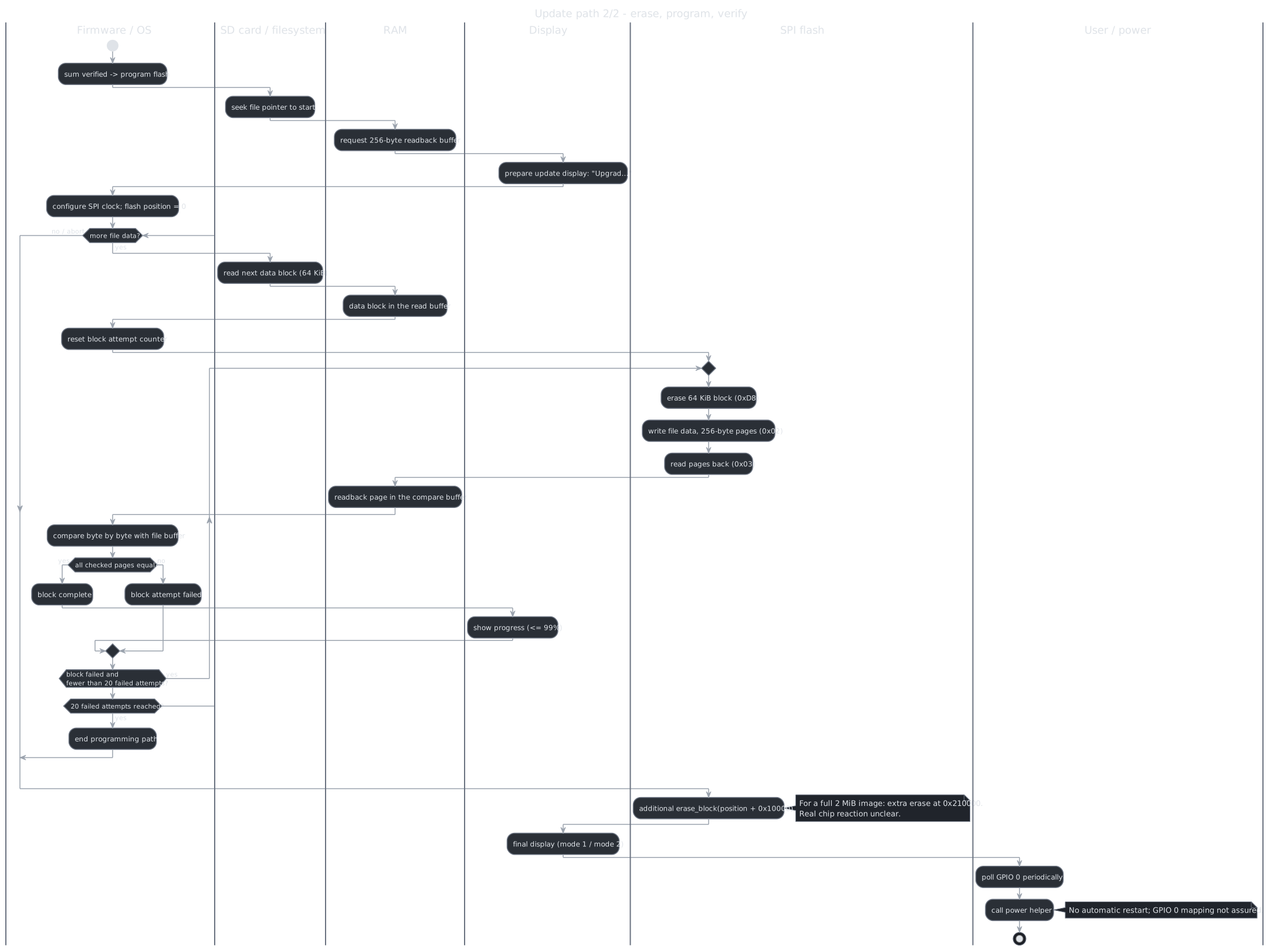
Search on the SD card, verify the byte-sum, then erase, program and read back — and what it forgets to check.
Update
The filename is the whole "security"
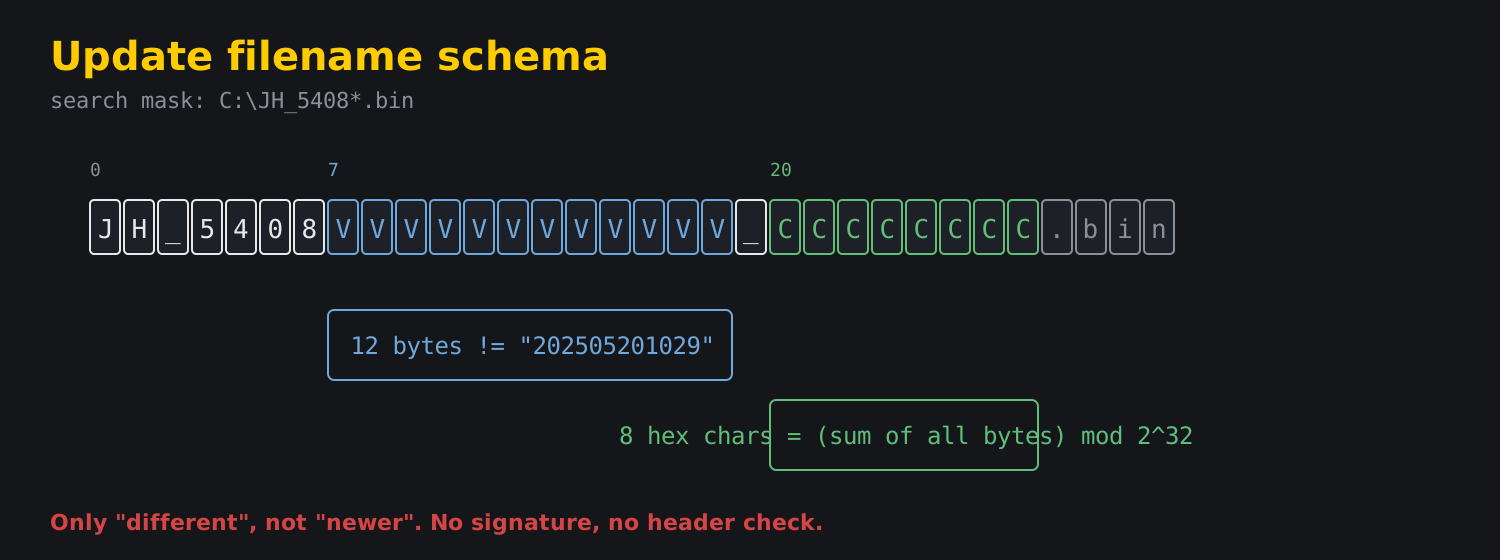
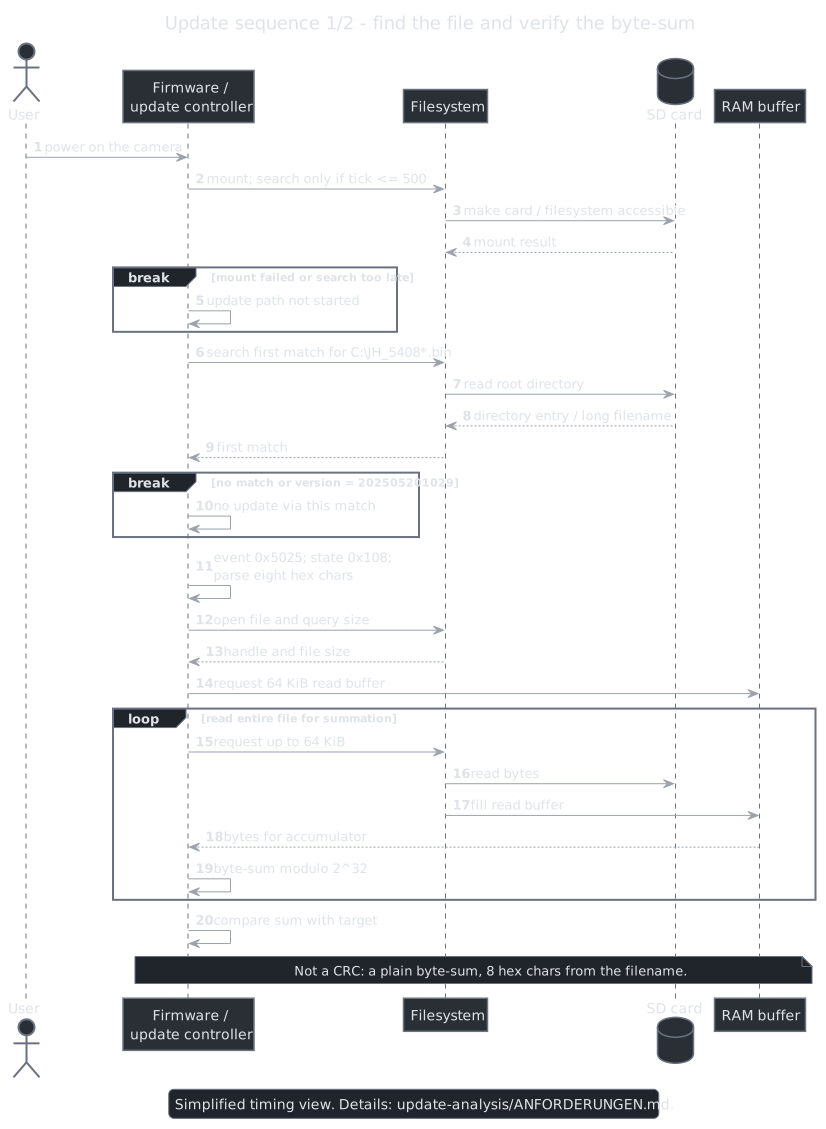
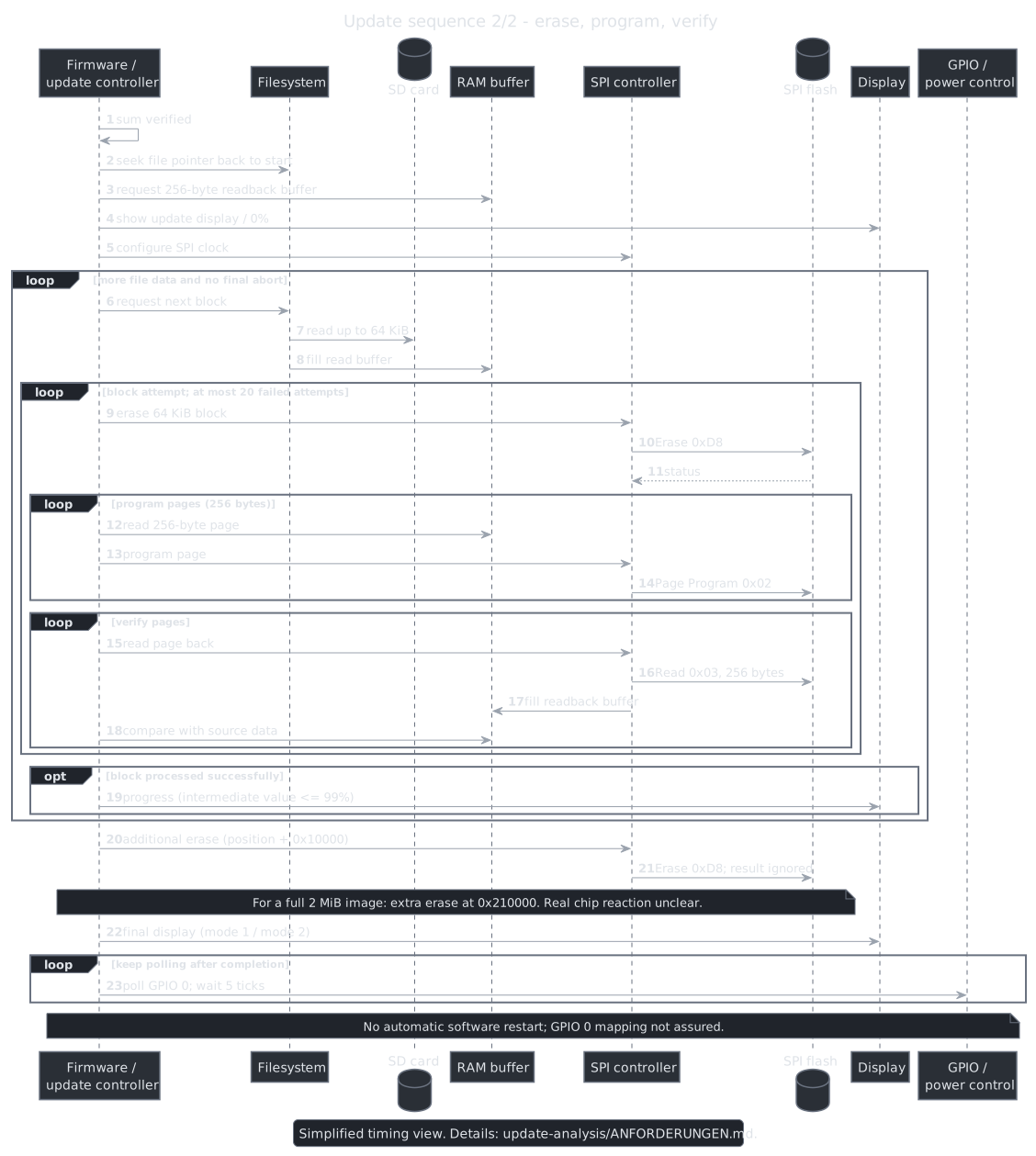
The expected value comes only from the 8 hex chars in the filename; what is checked is the byte-sum of the whole file (mod 232) — not a CRC, not a signature.
Hidden features
Formats and paths the menu never shows
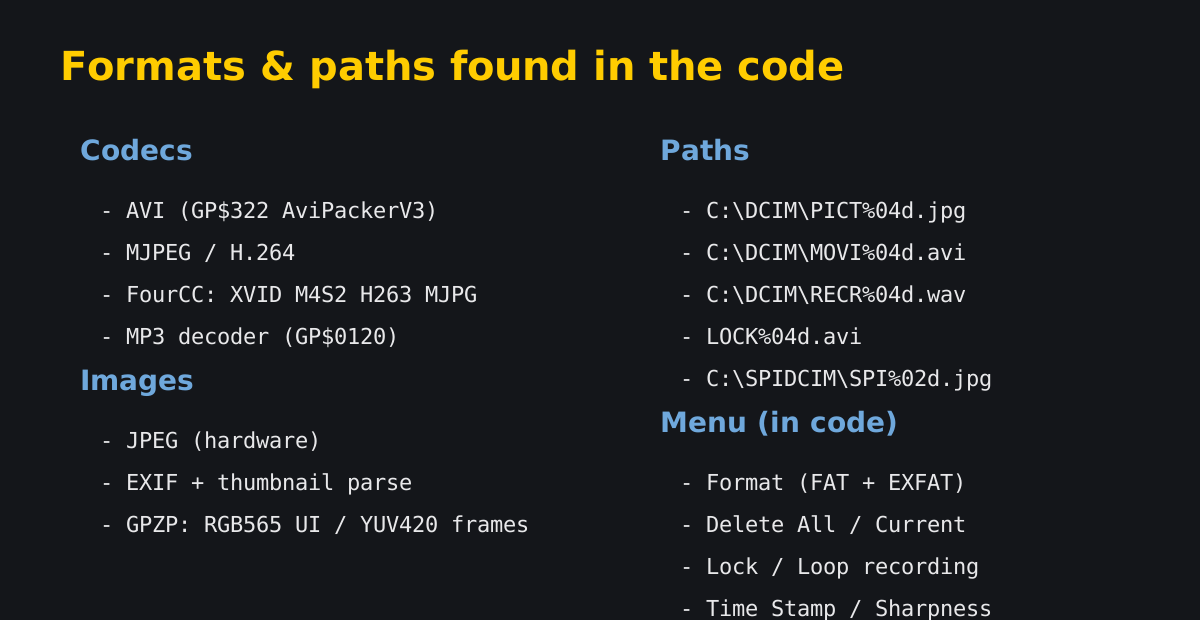
Hidden feature
SDK module inventory
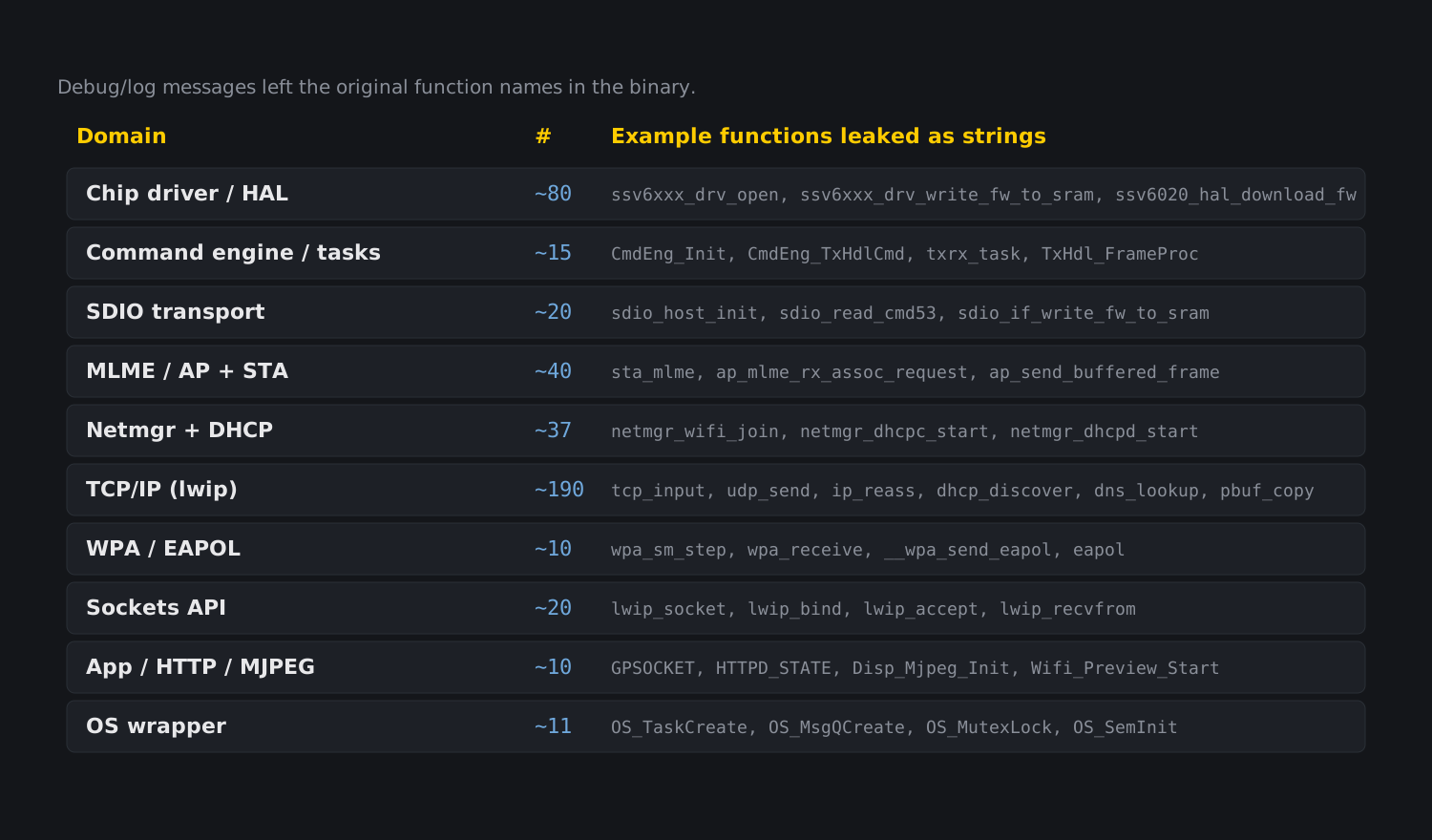
~780 KiB of SDK source in six layers (SDIO → driver → TCP/IP → WPA → app/HTTP). Debug log strings leaked the original function names — free reconnaissance.
Takeaways
- One dump, no symbols → recovered media, UI, behavior and hardware hints.
- Hidden formats matter: photo frames are YUV 4:2:0, not RGB565 — misread they give streaks and wrong colours.
- Copied SDK leftovers reveal hidden features and the exact build.
- The updater trusts a filename: expected value = 8 hex chars, checked against a plain byte-sum of the file — no signature.
- So a custom image (logo, frames, sounds, strings) is achievable.
- AI + radare2 move faster, but every claim is pinned to an offset and verified against ground truth.